


Nigeria’s launch of its Second One Health Antimicrobial Resistance National Action Plan (NAP 2.0) in October 2024 marked an important milestone in the country’s response to antimicrobial resistance (AMR).
Covering the period from 2024 to 2028, NAP 2.0 provides a renewed national framework for addressing antimicrobial resistance through a One Health approach, recognising the interconnectedness of human health, animal health, agriculture and the environment.
The plan builds on Nigeria’s first National Action Plan on AMR and sets out priorities for strengthening antimicrobial stewardship, surveillance, research, coordination and the systems needed to support implementation.
From NAP 1.0 to NAP 2.0
Nigeria’s first National Action Plan on Antimicrobial Resistance was developed as part of the country’s early efforts to establish a coordinated national response to AMR. It provided a foundation for bringing together stakeholders across sectors and defining national priorities for action.
NAP 2.0 represents the next stage of that response. Rather than starting from scratch, the second plan builds on the experience, lessons and priorities established through the implementation of the first NAP while strengthening the country’s approach to the evolving AMR threat.
A One Health Approach to Antimicrobial Resistance
Antimicrobial resistance does not exist within a single sector. The use and spread of antimicrobial-resistant organisms can move across people, animals, food systems and the environment.
NAP 2.0 therefore adopts a One Health approach, bringing together the different sectors that contribute to preventing and responding to AMR. This approach is essential to ensuring that national action is coordinated rather than fragmented.
Ducit Blue’s Contribution to the NAP 2.0 Development Process
Ducit Blue has a longstanding connection to Nigeria’s national AMR response. The organisation was involved in the development of Nigeria’s first National Action Plan on AMR and has continued to contribute to national and regional efforts to strengthen AMR policy and governance.
For NAP 2.0, Ducit Blue Foundation contributed to the development process, playing a key role in organising and structuring the NAP 2.0 development workshops around the plan’s five strategic objectives.
The process brought together stakeholders from different sectors, reflecting the multisectoral nature of the country’s response to antimicrobial resistance.
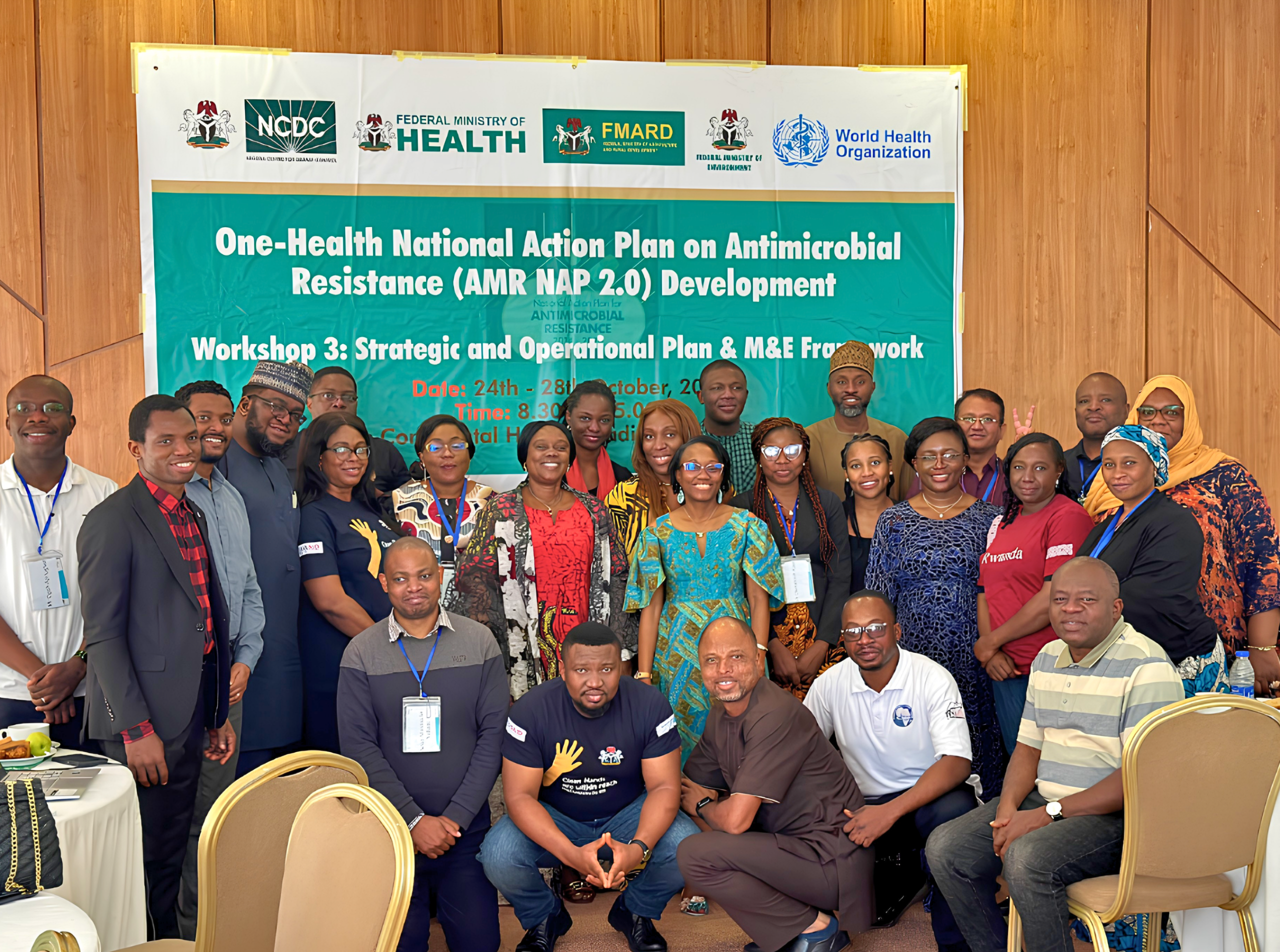
Stakeholders during Workshop 3 of the development of Nigeria’s Second One Health Antimicrobial Resistance National Action Plan (NAP 2.0), focused on the Strategic and Operational Plan and M&E Framework.
From strategy to action: The value of a national action plan ultimately lies in its implementation — translating national priorities into coordinated action across sectors, institutions and levels of the health system.
What NAP 2.0 Sets Out to Strengthen
The second National Action Plan provides a framework for strengthening several critical areas of Nigeria’s AMR response, including:
Antimicrobial Stewardship
Strengthening the responsible use of antimicrobials is central to slowing the emergence and spread of resistance and ensuring that these medicines remain effective for those who need them.
Surveillance and Detection
Effective surveillance is essential for understanding where resistance is emerging and how it is changing. Stronger surveillance and detection systems can support evidence-based decision-making and a more timely response.
Research and Innovation
Research remains important for generating evidence, understanding the drivers of AMR and developing approaches that can improve prevention, detection and response.
Multisectoral Coordination
Because AMR crosses sectoral boundaries, sustained coordination between human health, animal health, agriculture, environment and other relevant stakeholders is essential to implementation.
The Road Ahead
The launch of NAP 2.0 is an important step, but implementation will determine its lasting impact. Achieving the plan’s objectives will require sustained coordination, strong institutions, adequate resources, reliable data and continued engagement from stakeholders across the One Health spectrum.
As Nigeria moves from planning to implementation, the experience gained through NAP 1.0 and the development of NAP 2.0 provides an important foundation for strengthening the country’s response to antimicrobial resistance.
Access the National Action Plan
The full Nigeria Second One Health Antimicrobial Resistance National Action Plan 2024–2028 is available through the World Health Organization.
View NAP 2.0References
-
World Health Organization (WHO).
Nigeria: Second One Health Antimicrobial Resistance National Action Plan 2024–2028.
WHO official publication -
Nigeria Centre for Disease Control and Prevention (NCDC).
National antimicrobial resistance resources and documentation.
NCDC official website
