Author: Sarah Daniel

Introduction
Every generation of young people grows up in a world shaped by its own realities. For some, the greatest concerns may be access to education and employment; for others, economic uncertainty, social inequality, climate change, digital pressures or access to quality healthcare may define their everyday experiences. Yet, beneath these different realities lies a shared aspiration: young people want to live healthy, meaningful and fulfilling lives, with the opportunity to learn, work, lead and contribute to their communities. [1,2]
This year’s International Youth Day, commemorated on 12 August 2026, brought this shared aspiration into focus under the theme “Different Contexts, Common Aspirations.” The theme recognises that while young people experience different social, economic, and cultural realities, they share common aspirations for dignity, opportunity, participation, and a better future. [2]
One of the most important foundations for achieving these aspirations is health.
A young person cannot fully take advantage of educational opportunities, pursue a career, participate meaningfully in society or become an effective leader when their physical or mental well-being is neglected. This makes investment in youth health not simply a health-sector priority, but an investment in stronger families, communities, economies and societies. [2]
Beyond Surviving: Creating Conditions for Young People to Thrive
When we talk about youth health, the conversation often focuses on disease prevention and access to healthcare. These remain important, but the well-being of young people is much broader.
Health encompasses physical, mental and social well-being. It includes having access to nutritious food, opportunities for physical activity, safe environments, quality healthcare, accurate health information, supportive relationships and spaces where young people can express themselves without fear of stigma or discrimination. [3,4]
Mental health, in particular, deserves greater attention. According to the World Health Organization (WHO), one in seven adolescents aged 10–19 years experiences a mental health condition globally. Depression, anxiety and behavioural disorders are among the leading causes of illness and disability among adolescents. [4]
These figures remind us that being young does not automatically mean being free from health challenges.
Academic expectations, unemployment, financial pressures, social-media comparisons, relationship challenges, discrimination, uncertainty about the future and other pressures can affect young people’s mental and emotional well-being. At the same time, many young people who need support do not receive it. [3]
Creating a healthier future therefore requires us to move beyond asking young people to simply “be resilient.” We must also create environments that make resilience possible; through supportive families and communities, responsive health systems, safe schools and workplaces, meaningful opportunities and accessible mental health support. [3]
Healthy youth communities should promote:
- Physical well-being through healthy nutrition, physical activity, preventive care, and access to appropriate health services. [3,5]
- Mental and emotional well-being through supportive relationships, mental health awareness, early intervention, and reduced stigma. [4]
- Healthy decision-making by ensuring that young people have access to accurate, understandable health information.
- Digital well-being by helping young people navigate social media, misinformation and the pressures associated with digital spaces. [4]
- Sexual and reproductive health through age-appropriate information and access to appropriate services. [3]
- Safe and healthy environments that protect young people from violence, harmful substances, discrimination and other risks. [3]
- Meaningful participation by ensuring young people have opportunities to influence the decisions and policies that affect their lives. [2]
The WHO emphasises the importance of addressing mental health, preventing violence and harmful behaviours, promoting healthy lifestyles and ensuring that adolescents have access to appropriate health services. [3]
This is why youth well-being should not be viewed as a separate issue from education, employment, leadership or development. A healthy young population is better positioned to become an educated, productive and engaged population. [3]
From Health Recipients to Health Changemakers
Young people should not only be viewed as beneficiaries of health programmes. They are also important partners, advocates, innovators and decision-makers. [1]
Across communities, young people are already using their voices and skills to raise awareness, challenge misinformation, promote healthy behaviours and advocate for better policies. [1]
This is particularly important in tackling public-health challenges that require behavioural and societal change, including antimicrobial resistance (AMR). [8]
AMR is not only a technical issue for scientists, doctors and policymakers. Young people interact with healthcare systems, medicines, communities, food systems and the environment every day. They can therefore play an important role in promoting responsible antimicrobial use and infection prevention. [8]
More importantly, young people can become advocates who take these messages beyond the clinic and into schools, universities, workplaces, communities, and digital spaces. [8]
Bringing AMR Awareness to Campus
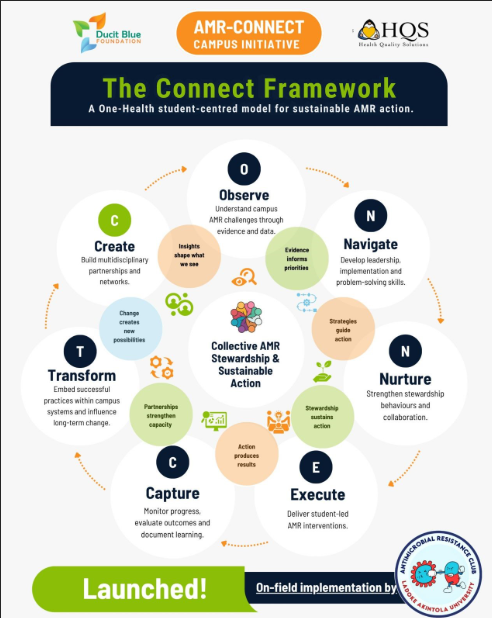
This belief is reflected in Ducit Blue Foundation’s AMR Connect Campus Initiative, including its engagement with the AMR Club at Ladoke Akintola University of Technology (LAUTECH). [6]
The initiative creates a platform for young people within academic communities to connect knowledge about antimicrobial resistance with practical action. By engaging student-led platforms such as the AMR Club LAUTECH, AMR Campus Connect supports young people to become informed participants and advocates in the fight against antimicrobial resistance. [6,9]
Universities provide a particularly important environment for this kind of engagement. Students are not only future health professionals and community leaders; they are also influential members of their peer networks. When equipped with accurate information, they can help challenge misconceptions, promote responsible antibiotic use and encourage healthier behaviours among their peers. [6,9]
Through initiatives such as AMR Campus Connect, conversations around AMR can move beyond technical discussions and become part of everyday campus life. Students can take these conversations into classrooms, student organisations, social spaces, families and online communities. [6,9]
This approach demonstrates what meaningful youth participation in health can look like: young people are not simply being taught about a health challenge; they are being equipped to communicate, advocate and contribute to solutions. [2]
The impact of such engagement can extend beyond a single university. When students gain knowledge, confidence and opportunities to participate in health advocacy, they become multipliers of health information, capable of taking important public-health messages into their communities and future professional spaces.
This is where youth empowerment becomes particularly powerful: when young people understand a health challenge, have the skills to communicate about it and are given opportunities to participate in solutions, they can become powerful agents of change. [2]
Investing in Young People: Ducit Blue Foundation’s Commitment
At Ducit Blue Foundation (DBF), the belief that young people are essential partners in building healthier communities is reflected in the Foundation’s work to develop capacity and empower young people across Africa.
According to the Ducit Blue Foundation, its work includes capacity empowerment, strategies for combating antimicrobial resistance, research and development, youth productivity, decision-making and advocacy. [7]
A key component of this work is the AMR One-Health Pan-African Internship and Mentorship Programme, which equips young One Health professionals with knowledge, skills and networks to contribute to tackling antimicrobial resistance across Africa. The programme brings together young people from different disciplines, reflecting the interconnected nature of the One Health approach. [10]
Through its internship and mentorship programmes, DBF provides opportunities for young people to participate in technical learning, leadership development, research, advocacy, collaborative projects and professional networking. [10]
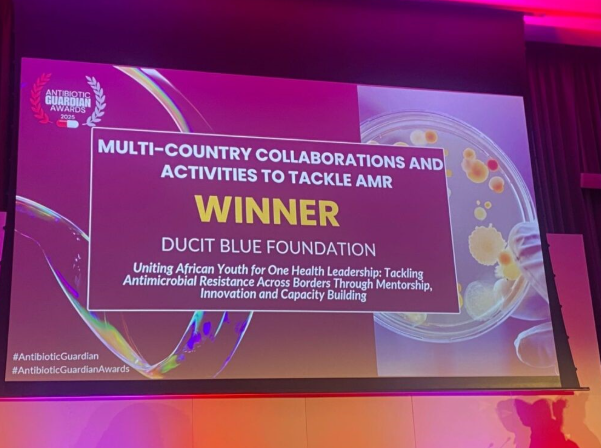
DBF’s youth-focused work has also received international recognition. Its AMR One Health Pan-African Internship and Mentorship Programme won the Multi-Country Collaboration Category at the 2025 Antibiotic Guardian Awards, recognising its contribution to youth leadership, mentorship, innovation and capacity building in the fight against antimicrobial resistance. [11]
According to DBF, the first three cohorts of the programme engaged 51 interns, 34 mentors and 59 facilitators from 19 African countries, demonstrating the potential of youth-focused capacity development to create cross-country networks of young health professionals. [7]
The Foundation’s work through initiatives such as AMR Campus Connect further demonstrates that youth engagement does not have to be limited to formal training programmes. By connecting with student-led platforms and creating opportunities for campus-based advocacy, young people can be supported to translate knowledge into action within their own communities. [9]
This demonstrates what can happen when young people are not simply invited to listen to conversations about health, but are given the knowledge, platforms and opportunities to shape those conversations.
Building Evidence and Capacity for the Next Generation
Youth empowerment also means equipping young people with the skills to generate and use evidence. [1,2]
A recent study published in BMC Medical Education, “Assessing antimicrobial resistance inclusion in pre-service pharmacy training curricula of five selected sub-Saharan African universities,” emerged from the 2020–2021 One Health Pan-African Internship Program organised by Ducit Blue Foundation in collaboration with the African Regional Office of the International Pharmaceutical Students Federation. [8]
The study examined how AMR content was incorporated into pharmacy curricula in selected universities in Nigeria, Kenya and Ghana, helping to identify gaps and opportunities for strengthening AMR education among future health professionals. [8]
This is an important example of how youth capacity development can go beyond training. When young professionals are given the opportunity to learn, research, collaborate, and generate evidence, they can contribute to strengthening health systems themselves. [7]
One Health: Connecting Youth Health to a Healthier Planet
Youth well-being cannot be separated from the health of the environment and other living systems.
This is particularly evident through the One Health approach, which recognises the interconnectedness of human, animal and environmental health. [9]
For young people, this connection is increasingly important. The food they consume, the water they drink, the environments in which they live, climate-related changes and exposure to health risks can all influence their well-being.
AMR provides a clear example. Resistant microorganisms can move between humans, animals, food systems and the environment, meaning that solutions cannot come from one sector alone. [9]
Young people therefore have an opportunity to become One Health champions; connecting conversations about personal health with broader issues such as environmental sustainability, food safety, responsible antimicrobial use and community health. [12]
Ducit Blue Foundation’s youth programmes reflect this approach by bringing together participants from different health-related disciplines and promoting multidisciplinary collaboration. Its One Health internship programme is designed to help young professionals understand the roles of different disciplines in addressing AMR. [6]
Different Contexts, Common Aspirations
The circumstances surrounding young people may differ considerably.
A young person in a rural community may face different barriers from someone living in a major city. A university student may have different health priorities from a young person entering the workforce. Young people living with disabilities, those facing economic hardship or those in underserved communities may experience additional barriers to accessing health services and opportunities. [1,2]
A Healthier Future Begins With Young People
International Youth Day is more than an annual celebration. It is an opportunity to reflect on whether young people have the support, opportunities and environments they need to thrive.
The theme “Different Contexts, Common Aspirations” reminds us that young people may come from different backgrounds and face different challenges, but their aspirations for health, dignity, opportunity and meaningful participation are shared. [1]
Investing in youth health therefore means investing in the future.
It means creating a world where young people are not simply expected to survive difficult circumstances, but are given the support and opportunities to thrive, lead and create change. [2]
A healthy young person has the potential to become a healthier parent, a stronger professional, an informed citizen, an advocate and a community leader. [1,2]
Healthy youth can build stronger communities. Stronger communities can build healthier societies. And healthier societies create a stronger future for everyone. [1,2]
As we reflect on International Youth Day 2026, initiatives such as AMR Campus Connect with the AMR Club LAUTECH remind us that investing in young people does not always require creating something entirely new. Sometimes, it means recognising the passion and potential that already exist among young people and providing them with the knowledge, mentorship, platforms and opportunities to turn that potential into action. [9]
Because when we invest in young people, we are not only changing lives today; we are shaping the healthier world of tomorrow. [1,2]
Ducit Blue Foundation’s Take
At Ducit Blue Foundation, we believe that young people should be recognised not merely as beneficiaries of health interventions, but as partners and leaders in creating healthier communities.
Our commitment to youth empowerment is reflected in our work to build capacity, strengthen knowledge, support research and create opportunities for young people to participate in health advocacy and decision-making. Through youth-focused initiatives; including the AMR One-Health Pan-African Internship and Mentorship Programme and AMR Campus Connect with the AMR Club LAUTECH, we continue to support young people with the knowledge, skills and platforms to contribute meaningfully to public health.
As we celebrate International Youth Day, we reaffirm our commitment to investing in a generation of young people who are informed, empowered and equipped to lead change.
Different contexts. Common aspirations. One shared commitment: a healthier future for every young person.
References
- United Nations. International Youth Day 2026: Different Contexts, Common Aspirations. United Nations, 2026. United Nations.
- United Nations Department of Economic and Social Affairs. 2026 International Youth Day. 12 August 2026. United Nations Department of Economic and Social Affairs.
- World Health Organization. Promoting adolescent well-being. WHO. World Health Organization.
- World Health Organization. Adolescent mental health. 2025. WHO Fact Sheet: Adolescent Mental Health.
- World Health Organization. Physical activity. WHO. World Health Organization.
- Health Quality Solutions. Coaching Students to Run Antimicrobial Resistance Fieldwork. LinkedIn, 2026. Health Quality Solutions LinkedIn post
- Ducit Blue Foundation. What We Do. Ducit Blue Foundation: What We Do.
- BMC Medical Education. Assessing antimicrobial resistance inclusion in pre-service pharmacy training curricula of five selected sub-Saharan African universities. 2026. Full research article.
- 9. Ducit Blue Foundation. AMR-Connect Campus Initiative officially launched: A student-led movement for sustainable AMR action through a One Health approach. LinkedIn, 2026. DBF LinkedIn post.
- 10. Ducit Blue Foundation. Our Internship Programmes. Ducit Blue Foundation: Internship Programmes.
- Ducit Blue Foundation. 2025 Antibiotic Guardian Awards: Multi-Country Collaboration Category. Ducit Blue Foundation: 2025 Antibiotic Guardian Awards.
- World Health Organization Regional Office for Europe. Action against antimicrobial resistance requires a One Health approach. 16 April 2024. One Health Approach
- World Health Organization. One Health. 8 May 2026. WHO One Health fact sheet