

How Integrated Digital Platforms like the IVI AMR Hub Are Revolutionising AMR Data and Surveillance

Authors: Emmanuel Oyelayo, Sarah Daniel

The Growing Threat of Antimicrobial Resistance in Africa

Imagine if the medicines we use to treat infections (like antibiotics, antivirals and antifungals) no longer work because the germs (bacteria, virus and fungal) have learned to fight back. That’s called antimicrobial resistance, or AMR for short. It makes common illnesses harder to treat which keeps people sick longer and can even lead to death. It is happening now, quietly reshaping the landscape of global health, and the consequences are already being measured in lives lost.

 In 2019, drug-resistant infections directly caused approximately  1.27 million deaths worldwide and contributed to nearly 5 million more [1]. Without decisive action, experts project that this number could rise to over 10 million deaths annually by 2050, a figure that would surpass cancer as a leading cause of death globally [2].

In Africa, the problem is even worse. Our continent has the highest death rate from AMR in the world which is about 27.3 deaths for every 100,000 people [3]. That’s more than from HIV, tuberculosis, and malaria combined in many places. Why is it so bad here? We face lots of infections, not everyone has good healthcare or clean water, and antibiotics are sometimes used too much or in the wrong way [4].

Compounding these challenges is a critical surveillance gap. Across  African countries, the systems needed to detect, track and respond to resistant pathogens remain fragile. Laboratories often lack equipment, trained personnel and mechanisms for cross-border data sharing information across countries which are well known to be underdeveloped. This makes it tough to spot problems early and stop them from spreading [5].

How Online Tools Are Changing the Game Against AMR

Now for the good news: smart digital platforms are making a real difference. These are online systems that collect information from different places and analyze it quickly to help researchers and public health professionals make better decisions fast.

They bring together data about resistant germs and how much antimicrobials is used. Sometimes they are also used in detecting patterns of use of this antimicrobials. This helps doctors, labs, and governments spot trends early and choose the right treatments. This also aids better working together. In places with fewer resources (like many parts of Africa), these tools make high-quality information available to everyone without needing fancy equipment [6].

Meet the IVI AMR Digital Hub: A Helpful Friend in the Fight

One great example is the IVI AMR Digital Hub, developed by the International Vaccine Institute (IVI), a nonprofit group focused on vaccines and better health for everyone [7].

This Hub is a free online platform that brings together several easy-to-use tools to watch for AMR and to support use of antimicrobials wisely [7]. It collects and connects data from labs and hospitals, so everyone can see clear pictures and get helpful insights.

Here are some of the main tools inside the Hub:

  • QAAPT (Quick Analysis of Antimicrobial Patterns and Trends): This is a powerful, AI-driven, web-based tool developed under the Capturing Data on Antimicrobial Resistance Patterns and Trends in Use in Regions of Asia (CAPTURA) project. It lets users upload lab data and instantly see real-time visualizations, charts, trends over time, antibiograms (resistance patterns), and more [8]. You can apply filters (like by age, sex, specimen type, or date), ask questions in everyday language for quick answers, generate dashboards for surveillance and reporting, and export results in formats like PDF, Excel, or images. It also supports data curation (cleaning and organizing) and can connect with other systems like WHONET for easy imports [9]. It’s especially helpful for decision-makers who need fast, evidence-based insights to guide actions against AMR.
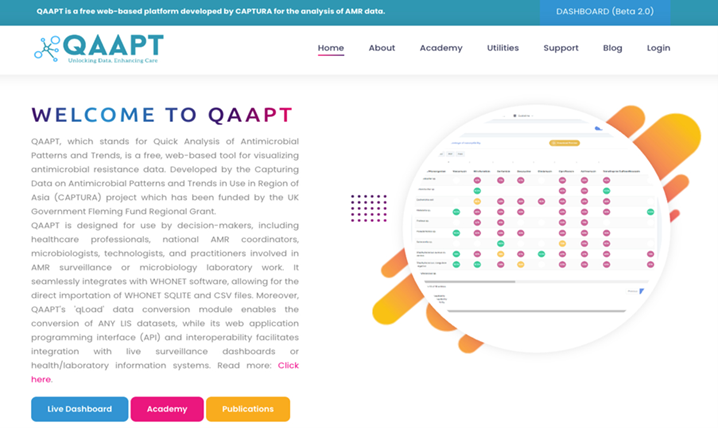
The QAAPT web interface, an AI-driven tool that transforms raw lab data into real-time visual charts. (Photo Credit: IVI Digital AMR Hub Portal)
  • Dispensary and AMC Portal: The Dispensary is a cloud-based system that helps pharmacies track inventory and antibiotic dispensing in real time thereby, improving accountability and daily operations. The AMC (Antimicrobial Consumption) Portal [11] is a web tool for collecting and monitoring national-level data on how much antimicrobial medicine is used. It creates standardized reports and charts showing consumption by year, drug category (like AWaRE groups from WHO), route of administration (oral, injection, etc.), and more. This helps governments and health authorities make smarter policies to reduce overuse and support safe antibiotic practices.
  • WHONET: This is a free, widely used desktop software (now integrated into the Hub ecosystem) developed with support from the World Health Organization (WHO). Labs in over 130 countries rely on it to manage microbiology test results and analyze antimicrobial resistance. It also helps them prepare data for sharing with WHO’s global surveillance system (GLASS) [10]. It helps with local needs like clinical decisions, infection control, outbreak detection, and understanding resistance patterns in hospitals, public health, animal health, or food safety labs. The Hub makes it easier to use WHONET data alongside other tools for broader analysis.
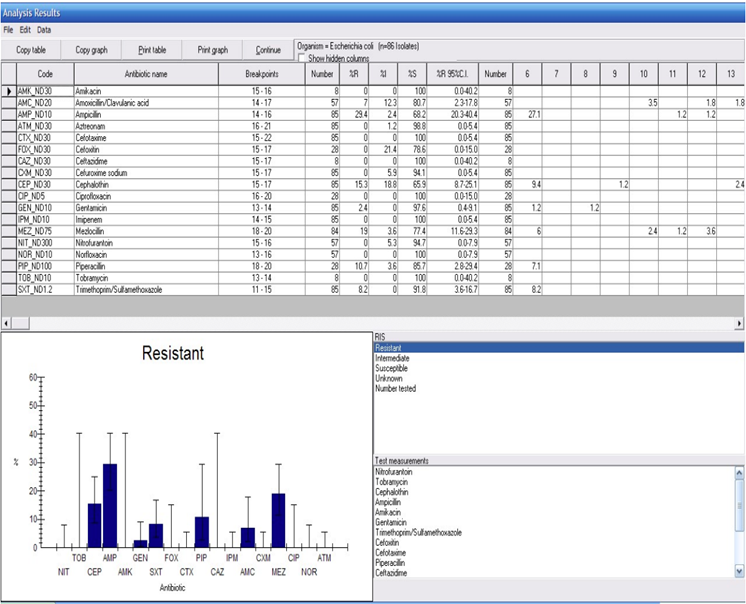
A screenshot of the WHONET software interface showing an analysis of Escherichia coli resistance patterns. (Photo Credit: IVI Digital AMR Hub Portal)
  • NAPS and IPCTrack: NAPS (National Antimicrobial Prescribing Survey) is a tool that supports hospitals and healthcare facilities to run surveys on how antibiotics are prescribed. It helps identify trends and promote antimicrobial stewardship for better patient care and lower resistance [12]. IPCTrack focuses on infection prevention and control (IPC). It provides assessments to check how well hospitals and facilities stop infections from spreading, which reduces the need for antibiotics in the first place and ties directly into overall AMR control efforts.
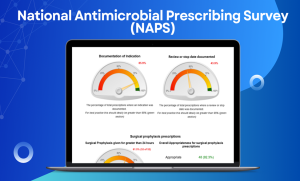
  • A NAPS dashboard used by healthcare facilities to monitor how antibiotics are prescribed and ensure clinical best practices are followed. (Photo Credit: IVI Digital AMR Hub Portal

How This Is Helping Right Here in Africa

Antimicrobial resistance is one of the most complex and persistently underestimated threats in global public health. Confronting it requires not only the development of new therapeutic agents, but the construction of smarter, better-connected systems, platforms that can aggregate fragmented data, surface patterns in real time, and deliver evidence to clinicians and policymakers at every level of the health sysyem.

In Africa, where labs and health systems often struggle with limited resources, the IVI Hub and related projects are making a real change. IVI runs programs like RADAAR to help countries in sub-Saharan Africa analyze data better, share it across health, animals, and environment, and turn it into real policies [13].

Because the Hub is free and open, African labs and leaders can use it to monitor things in real time without depending on old, separate systems. Tools like WHONET and QAAPT let labs join global efforts while getting helpful analysis. This helps predict problems that can arise from antimicrobial misuse and save lives.

The antimicrobials that have defined modern medicine may be under threat but the digital systems being built to protect them are becoming more capable every year. Investing in and scaling these platforms is not merely a technical priority. It is a public health imperative. Africa CDC and partners are teaming up to bring these digital tools into national plans for stronger tracking and testing [14].

References

  1. Murray, C. J., Ikuta, K. S., Sharara, F., Swetschinski, L., Robles Aguilar, G., Gray, A., … & Naghavi, M. (2022). Global burden of bacterial antimicrobial resistance in 2019: a systematic analysis. The Lancet, 399(10325), 629-655. https://www.thelancet.com/journals/lancet/article/PIIS0140-6736(21)02724-0/fulltext
  2. Masterson, V. (2025, November 12). How the world can tackle the rising threat of antimicrobial resistance. World Economic Forum. https://www.weforum.org/stories/2025/11/antimicrobial-resistance-superbugs-antibiotics/
  3. Africa CDC. (2023, November 21). Antimicrobial resistance: New report warns of growing threat. https://africacdc.org/news-item/antimicrobial-resistance-new-report-warns-of-growing-threat/
  4. GBD 2021 Antimicrobial Resistance Collaborators. (2025). Global burden of bacterial antimicrobial resistance in 2021: A systematic analysis with forecasts to 2050. PLOS Medicine, 22(1), e1004638. https://journals.plos.org/plosmedicine/article?id=10.1371/journal.pmed.1004638
  5. Molina, A., Ihorimbere, T.,… Affara, M. (2025). Strategies and challenges in containing antimicrobial resistance in East Africa: a focus on laboratory-based surveillance. Antimicrobial Resistance & Infection Control, 14(134). https://pmc.ncbi.nlm.nih.gov/articles/PMC12593786/
  6. Aboushady, A. (2025, March). Reflections on AMR surveillance: The good, the bad, the forgotten [PowerPoint slides]. RADAAR Brainstorming Meeting, Bangkok, Thailand. International Vaccine Institute. https://www.ivi.int/wp-content/uploads/2025/07/%EB%B6%99%EC%9E%84-06.-Reflections-on-AMR_BKK-ppt.pdf
  7. International Vaccine Institute. (n.d.). AMR Digital Hub: A centralized platform for AMR related tools. Retrieved [17/02/2026], from https://amrdigitalhub.com/
  1. International Vaccine Institute. (2025). QAAPT: Quick Analysis of Antimicrobial Patterns and Trends. https://qaapt.com/
  1. International Vaccine Institute. (n.d.). Quick analysis of antimicrobial patterns and trends. CAPTURA: Capturing Data on AMR Patterns and Trends in Use in Regions of Asia. Retrieved [17/02/2026], from https://captura.ivi.int/quick-analysis-of-antimicrobial-patterns-and-trends/
  2. World Health Organization. (n.d.). Global Antimicrobial Resistance and Use Surveillance System (GLASS). Retrieved [17/02/2026], from https://www.who.int/initiatives/glass
  3. International Vaccine Institute. (n.d.). CAPTURA AMC Tool: A centralized portal for antimicrobial consumption monitoring. Retrieved [17/02/2026], from https://ivi-amc.vercel.app/auth/sign-in
  4. National Centre for Antimicrobial Stewardship. (n.d.). National Antimicrobial Prescribing Survey (NAPS). Royal Melbourne Hospital. Retrieved [17/02/2026], from https://naps.org.au/
  5. International Vaccine Institute. (n.d.). RADAAR activities: Bridging the gap between data and policy. Retrieved [17/02/2026], from https://www.ivi.int/what-we-do/research-areas/amr/radaar/activities/
  6.  Africa Centres for Disease Control and Prevention. (2024). Antimicrobial resistance surveillance guidance for the African region. African Union. https://africacdc.org/download/antimicrobial-resistance-surveillance-guidance-for-the-african-region/

Leave a Reply